
When I first realized people were searching for brands in ChatGPT and other AI tools instead of Google, I felt a mix of curiosity and concern. Suddenly, my brand reputation was in the hands of language models trained on data I couldn’t fully see or control. I started testing questions myself and quickly saw how easy it was for an LLM to state a feature I never offered or quote a price I never set. This experience was a wake-up call to the new risks companies face in the era of AI-first search.
Why tracking LLM outputs for your brand is now necessary
A few years ago, misinformation was mainly viral posts or misquotes on review platforms. Now, large language models (LLMs) answer direct questions about your company, its pricing, its position among competitors, and even details about your features and performance. The catch? LLMs make mistakes. They can “hallucinate”—a term that’s become almost mainstream—to describe moments when the AI invents facts with total confidence.
These errors can spread fast. When I spot a false claim about a company inside an AI-generated response, I often wonder how many other users see it and take it as truth. If you care about your digital reputation, tracking what LLMs say matters just as much as monitoring social media, if not more.
Common kinds of LLM false information about brands
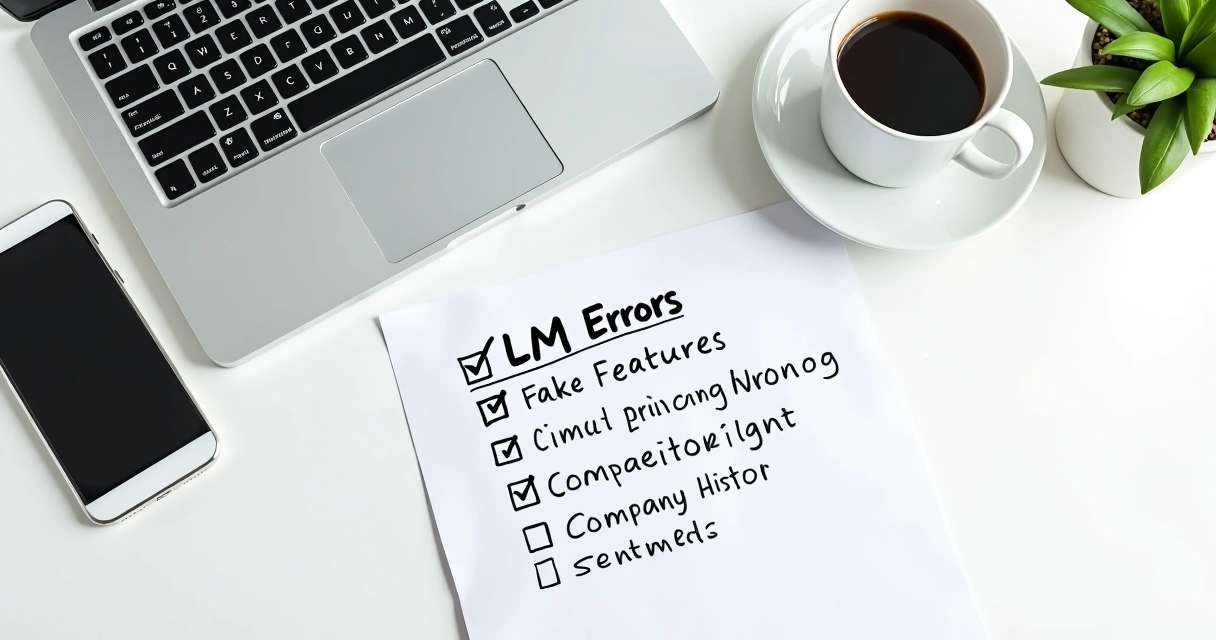
Through consistent testing and research, I’ve noticed certain patterns in how LLMs get things wrong. Here are the most frequent issues:
- Hallucinated features: Claiming your product offers something it really doesn’t. For example, listing integrations or tools you haven’t built.
- Incorrect pricing: Sharing outdated or completely invented prices, discounts, or special offers.
- Faulty competitor comparisons: Misrepresenting how your service stacks up against others, sometimes referencing features only one company actually provides.
- Wrong leadership or company history: Assigning you the wrong founders, executives, or date of creation.
- Misleading sentiment: Painting your company as “troubled” or “the best” based on no real evidence, simply due to bias or unreliable source material.
These errors might be unintentional, but their effect on brand perception can be very real.
How to identify false statements in LLM outputs
When I check what LLMs say about a brand, I take a direct and methodical approach. Here’s how I approach the process:
- Define your brand topics. Before searching, list out the main themes and claims related to your brand—your primary features, leadership, pricing structure, and any unique selling points.
- Ask targeted questions. Don’t wait for chance. Prompt the LLMs with questions real customers might ask, like “What is Company X?” or “What makes Company X different?” Note each answer, even to minor variations in phrasing.
- Compare to actual facts. Check every statement against your up-to-date product info, About page, and official documentation. The simplest way to spot hallucinations is to know your own truth inside out.
- Keep a log of inaccuracies. When you see errors, document them: copy the full response, highlight the misinformation, and record which model and date produced it.
These steps help me structure the monitoring process, so I catch both small slip-ups and bigger reputational threats.
Automating LLM output monitoring with AI tools
Checking responses by hand works when starting out. But as your brand grows, and AI adoption increases, manual monitoring is tough to scale. That’s where a platform like getmiru.io comes in. With automated tracking over major LLMs – ChatGPT, Claude, Gemini, Perplexity – it checks what is being said, how often, and how those responses change over time.
Automated monitoring helps with several things:
- Getting alerts when a new hallucination appears
- Tracking changes in sentiment or perception across different AIs
- Identifying trending topics and inaccurate claims before they spread
- Seeing which sources are being cited when LLMs describe your brand
I’ve found that specialized AI monitoring platforms simplify this entire workflow. Not only do you save time, but you also guarantee full visibility over how LLMs build and change your digital reputation.
Understanding model citations and their impact
When large language models provide citations in their answers, it’s tempting to treat those sources as reliable. I’ve learned that’s not always the case. LLMs sometimes generate links or references that look genuine but don’t match the actual source content, or even link to outdated facts.
That’s why citation analysis is essential. Knowing which sources LLMs rely on, and which ones lead to hallucinated information, can help you tailor your brand communications and clarify facts on official channels.
What to do when false information is detected
Finding an error is just the beginning. In my experience, there’s a smart process for addressing LLM-generated falsehoods:
- Update your website and official documents. Make official facts clear and easy to find, so LLMs pick up accurate data as they retrain.
- Boost clarity on key landing pages. Make sure your About, Pricing, and FAQ sections are up-to-date and reflect your true offering.
- Provide feedback when possible. Some LLM interfaces allow you to flag mistakes. Use these mechanisms to report errors or suggest corrections.
- Monitor the response over time. I like to revisit questions after a few weeks to see if misinformation persists or if sources have updated.
- Engage your community. Encourage users, customers, and employees to check LLM-generated content and report mistakes.

Keeping up with evolving LLM outputs
The answers an LLM gives today can change in a month or even week. This is why regular monitoring matters. I always recommend creating a schedule, whether it’s monthly or quarterly, so you don’t miss shifts in how your brand is described. With tools like getmiru.io, I can quickly spot trends and respond before any misinformation snowballs.
If you want practical insights on digital reputation, I find it useful to follow resources like digital reputation monitoring, AI monitoring, or broader topics at intelligence platforms. For those interested in marketing-side solutions, I suggest reading about AI marketing strategies or checking out hands-on examples at this recent post.
Conclusion
After several years in the brand and AI space, I’m convinced that actively tracking what LLMs say about your company is now a necessary part of digital brand management. These models influence how leads, clients, and the wider public perceive you, sometimes in subtle and unexpected ways.
You can’t manage what you can’t measure.
If you want to ensure LLMs represent your brand accurately, I encourage you to discover how getmiru.io can reshape your approach to AI monitoring, and help you stay proactive, not reactive, in this new era.
Frequently asked questions
What is LLM-generated false information?
LLM-generated false information refers to statements or details created by large language models like ChatGPT, Claude, Gemini, or Perplexity that are not based on real, verifiable facts about your brand. This can include made-up features, incorrect prices, or outdated data the model pulls from its training set.
How to monitor LLM outputs for brand mentions?
Some start by manually querying LLMs with brand-related questions and tracking answers over time. Others use monitoring tools that automate this process, collect responses from various AIs, and summarize any new or suspicious claims, making it easier to keep watch as your brand footprint grows.
What tools help track false brand info?
Platforms like getmiru.io are designed specifically to monitor what leading LLMs say about your company and quickly alert you to false claims, hallucinations, or citation problems. These solutions often include dashboards, sentiment analysis, and error tracking to help you stay ahead.
How often should I check LLM outputs?
I suggest checking LLM outputs at regular intervals, like monthly or quarterly. However, if your company is in a fast-changing space or launches new products often, consider more frequent checks. The key is consistency, as LLM responses may evolve as models update or as more data becomes available.
Is it worth it to monitor LLMs?
If your brand value, reputation, and trust matter to you, then monitoring LLM outputs is absolutely worthwhile. The risks of false or outdated information can hurt customer trust, so an active monitoring process helps reduce those risks and allows for quick correction when needed.