
When I first started managing brand reputation, most tools I used focused on traditional social listening: tracking mentions, hashtags, and media sentiment across the usual channels. Back then, “reputation” mostly meant monitoring what people posted on Twitter, Facebook, LinkedIn, or specialty forums. In 2026, though, the entire landscape has shifted. Customers, journalists, partners—even potential hires—now rely more on AI assistants like ChatGPT and Gemini for fast answers about brands.
Because of that, the way I measure a company's reputation has had to keep up. In this article, I want to compare the different ways Sprout Social and getmiru.io handle reputation insights, and show which platform gives the most relevant answers for this new, AI-first era.
How I see reputation in 2026
Let me begin with a simple truth:
“AI models are the new gatekeepers for brand perception.”
If someone asks ChatGPT, “Is Brand X trustworthy?” or “Which SaaS tool has the best support?” the LLM’s answer can directly influence that person’s buying choice, even more than a high-traffic tweet or a news headline. This is why, in 2026, brand reputation management is as much about understanding AI responses as it is about social trends.
Key areas of comparison
- Coverage of LLM and social channels
- Metrics tracked and surfaced
- Reporting and visualization
- Real-time alerting
- Brand Reputation Manager workflows
- AI-driven risk detection and management
Below, I’ll walk through each in detail, based on my own experience and the hands-on time I’ve spent with both platforms.
Channel and LLM coverage: where reputation is shaped
Sprout Social’s roots are built into social networks—think Facebook, Instagram, X, LinkedIn, and sometimes forums and blogs. This is good for tracking typical mentions, campaign impact, and influencer feedback. When I needed to see how a Twitter trend about my company was growing, Sprout Social always delivered.
But the challenge? “Social-first” is no longer the full story.
getmiru.io steps in differently. Instead of monitoring only people and their posts, it puts AI models—their output and their evolving knowledge—at the core. That means I get a window into what ChatGPT, Claude, Gemini, and Perplexity are saying about a brand, right now, across a curated set of test prompts and queries.

This AI-first approach is more than a checklist. When a user asks, “What is the pricing for Service X?” or “Which brand offers the best competitor comparison?” the platform reveals the actual, generated responses—hallucinations, mistakes, bias and all.
In 2026, “reputation” is not just about social opinion—it's about the LLM outputs that more real people rely on.
Metrics and signal quality: what really counts?
Both platforms offer classic metrics: sentiment score, mention volume, reach, and changes over time. However, what surprised me when I tested getmiru.io was its focus on what I’ll call “AI-native” signals.
- Direct quote monitoring: See the current, real answer for key questions, refreshed daily or on demand.
- Hallucination alerts: Highlight when LLMs invent pricing, describe features that don’t exist, or confuse brands entirely.
- Competitor comparison insights: Report which brands the AI is comparing you to—and whether that’s favorable or not.
- Citation tracing: Track the websites and articles the AI cites in its answers, indicating where misinformation or bias may creep in.
As a Brand Reputation Manager, I found this uniquely helpful. I could immediately spot when ChatGPT started listing a discontinued feature, or when Gemini mixed up two brands due to similar names, and take action before misinformation spread to new users relying on AI search.
Reporting and visualization: what do I show the C-suite?
Executive teams want simple signals—“Are we improving?”—but also need detailed context. Sprout Social provides clear historical visuals for social sentiment and mentions. For years, I included these reports in monthly reviews because they’re simple and familiar.
But these reports never answered the new main question I heard after 2024:
“What does ChatGPT think about us today?”
That’s where getmiru.io changed how I reported to leadership. The platform breaks down changes in LLM responses, visualizes which AI mentions a brand the most, and spots which new sources are driving shifts in perception.
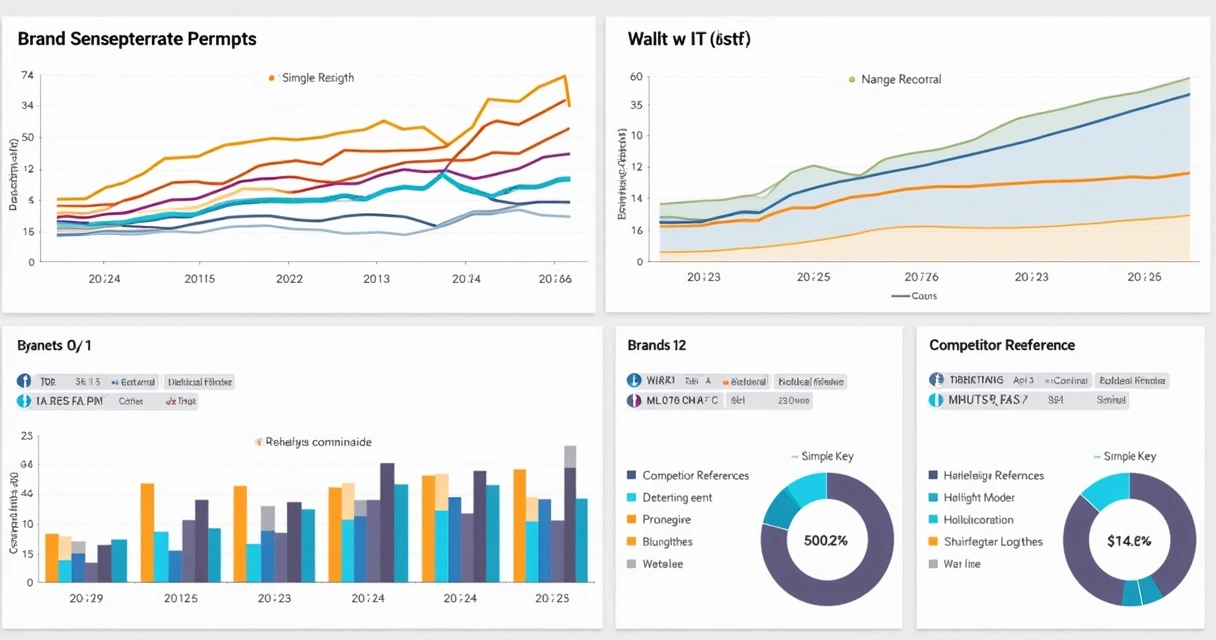
I really liked the side-by-side timelines showing when our documentation updates affected AI summaries. The citation tracking visual also helped me spot which external articles were disproportionately affecting ChatGPT’s view of my company. If you want to dig more into how digital reputation shapes up, the posts I read at this example article about digital reputation helped clarify the landscape.
Alerting and real-time workflows: who gets notified, and when?
Sprout Social offers real-time alerts for sudden spikes in negative mentions or trending posts. This helped my team jump on viral complaints before they made it to the news cycle. But the alerts stopped at social listening.
In contrast, getmiru.io alerts are focused on shifts in AI answers. For example, I immediately get notified if Gemini invents a new price point for our core service, or if Claude starts referencing a competitor incorrectly. These are the kinds of errors that can spread quietly but are damaging if unaddressed. The real kicker for me was the adjustable alert settings: I can choose which questions or answers to watch, and which changes I care about most.
For more about setting up monitoring rules, I found monitoring strategies that match what I experienced on getmiru.io.
Brand reputation manager workflow: a real-day use case
A typical day for me as a Brand Reputation Manager in 2026 starts like this:
- Review daily AI model summaries for my brand—looking at the changes in sentiment, facts, or comparisons to others.
- Scan hallucination reports for any invented features or outdated facts in LLM answers.
- Check citation logs to see which third-party sites are influencing AI views.
- Flag any negative shifts and assign them to the right internal teams—this could mean marketing, PR, or product managers.
- Send customized reputation reports to leadership, highlighting top AI influencers, fluctuating LLM outputs, and suggested response actions.
Getmiru.io feels like a platform built for this new cycle of work, not just bolted on to classic social tools. I also like how it gives me a structured approach to handling sudden reputation risks from AI, which is something you can see in content about brand competition and digital risk as the market evolves.
AI-driven risks and risk management
In traditional reputation platforms, most “risk” is measured as negativity: a bad review, viral complaint, or unfavorable press. But with LLMs, the biggest risk is wrong information—generated at scale, usually without anyone meaning to cause harm.
AI risk is subtle, content-driven, and can quickly shape thousands of user journeys.
In my experience, getmiru.io is the only platform I’ve seen that maps these hallucinations, errors, and outdated facts automatically. By tracing the origin and suggesting source updates, it actually helps me prevent future risk, not just react after the fact.
To learn more about the bigger picture of online reputation, I recommend reading articles on digital reputation to understand the mindset shift that these tools have triggered.
Conclusion: What’s the right choice for 2026?
All in all, both Sprout Social and getmiru.io serve reputation professionals, but in very different ways. Sprout Social is still a smart choice for teams mostly concerned with social networks and public conversation. However, in my own work, where AI-generated perception is now the main battlefield, I find getmiru.io’s focus on LLMs, risk detection, and reporting to be exactly what I need today.
If your clients, customers, or partners ask ChatGPT about your brand, you need to know what it says.
To see how AI is shaping your company’s story—and how you can take back control over digital reputation—learn more about getmiru.io and how it can give your team an edge.
Frequently asked questions
What is Sprout Social used for?
Sprout Social is a platform for managing and analyzing social media accounts. It helps teams schedule posts, track engagement, monitor mentions, and understand sentiment across networks like Facebook, X, Instagram, and LinkedIn. It is built for classic social listening and engagement workflows, not for analyzing what AI systems say about brands.
How does getmiru.io compare to Sprout Social?
getmiru.io focuses on tracking, analyzing, and alerting on what major AI language models are saying about brands, while Sprout Social is centered on social channel listening.With getmiru.io, I monitor LLM outputs, spot AI hallucinations, trace answer citations, and manage digital risk specific to AI-generated perception—something classic social platforms do not cover.
Is it worth it to switch platforms?
If your reputation problems are mainly on social networks, Sprout Social can be enough. But if you care about how AI assistants shape your brand story or want to catch misinformation early, moving to getmiru.io offers unique benefits that match 2026’s needs.
How much do reputation insights cost?
Pricing depends on platform features, scale, and number of users. Social listening suites charge by channel and volume, while getmiru.io typically bases pricing on how many LLM models or queries you want to monitor, as well as team users. For more info about real-world pricing, it can help to read examples from recent case studies here.
What are the best features in 2026?
The top features I see today are live AI model response tracking, hallucination detection, real-time alerts for risky or wrong AI outputs, and easy-to-share reports that bridge classic PR and digital managers. Platforms like getmiru.io are setting new standards with these capabilities.